Explore Jeju

Find 6,600+ places by area, type and mood.

2,826 places

Gase OreumNature

East120 min

Gase Oreum

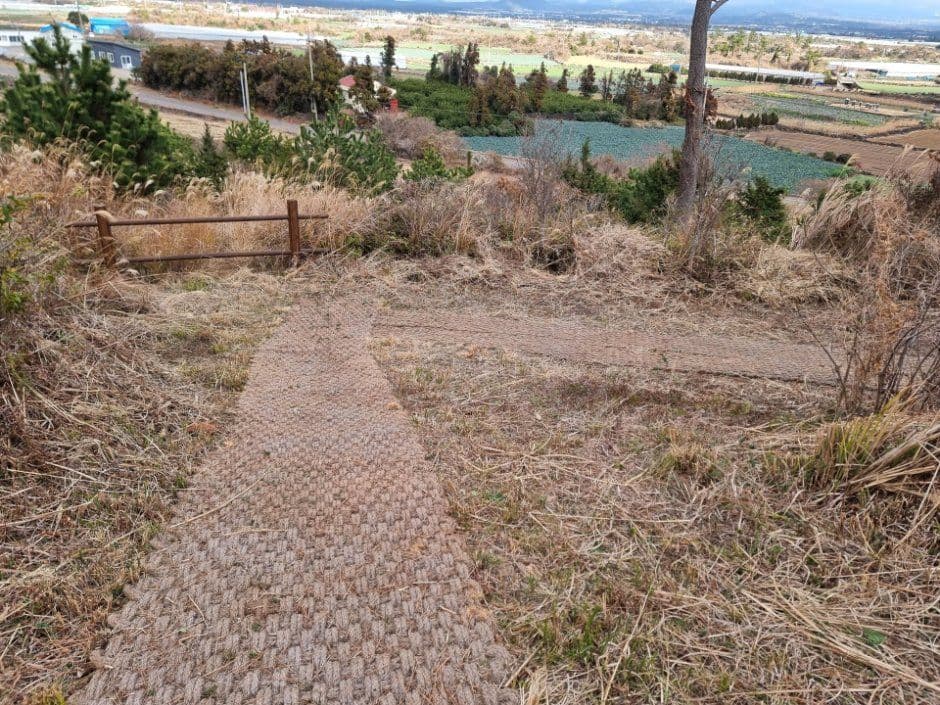
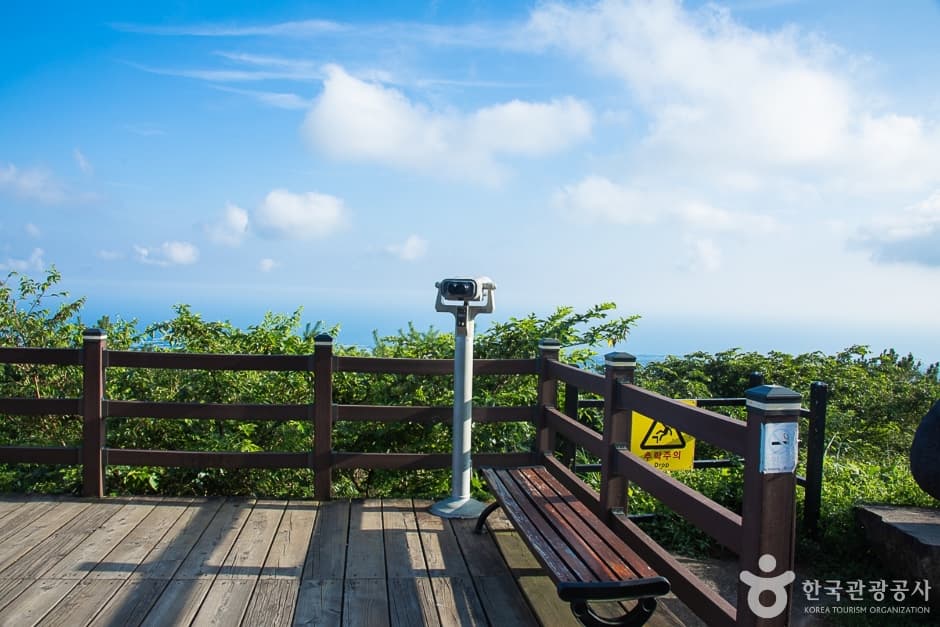
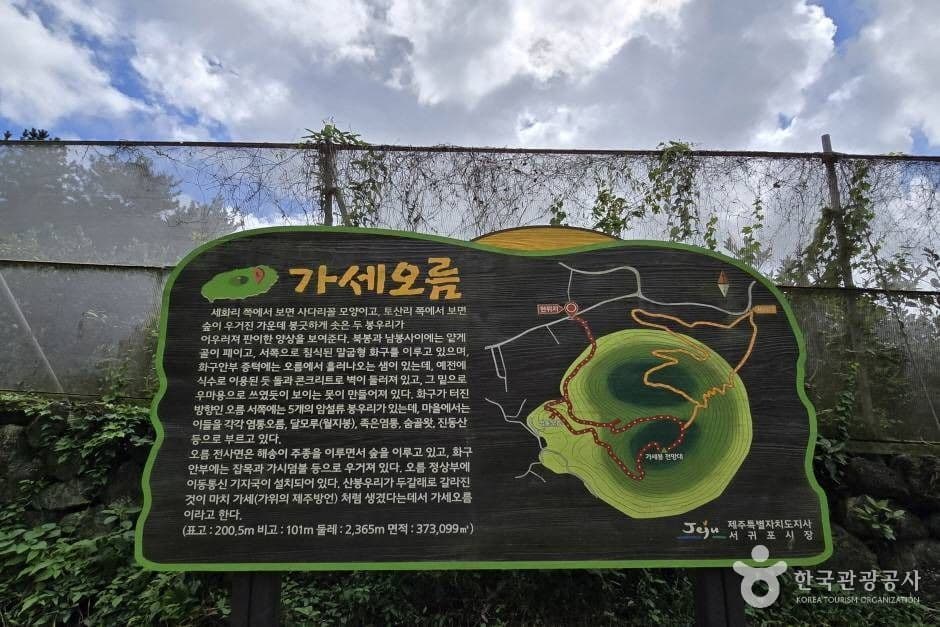
Located in Pyoseon-myeon, Gase Oreum is a horseshoe-shaped volcanic cone with a split summit. Its name, derived from the Jeju dialect word "gase" meaning "scissors," comes from its resemblance to a pair of shears. The oreum features five rocky peaks: Yeomtong Oreum, Jogeun Yeomtong, Dalmoru, Jindongsan, and Sumgolwat. However, these peaks are often hidden by dense thickets and lack formal trails, making them difficult to locate. While there are directional signs for first-time visitors, the complex terrain can easily lead to getting lost. Due to the risk of scratches from thorny bushes, wearing long pants is highly recommended. A mobile base station sits on the northern peak, while a guard post stands atop the southern peak, serving as easy landmarks for navigation. Once you reach the summit and climb to the guard post, you can enjoy a breathtaking panoramic view of the cluster of oreums in Gasi-ri.
Gasiri Guksanhwa Wind FarmNature

East120 min

Gasiri Guksanhwa Wind Farm

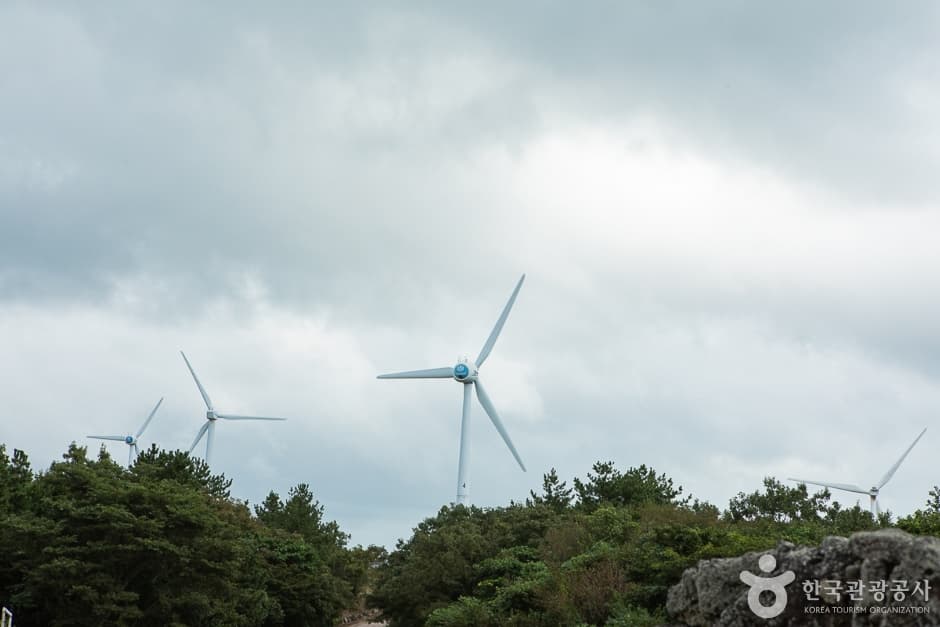
Located in Gasiri, Pyoseon-myeon—an untouched corner of southeastern Seogwipo—this wind farm marks a transformative milestone for the village since its selection in 2009 as Korea's first community-participatory wind power project. Set within the vast plains of the Gasiri Common Pasture, the site is surrounded by stunning canola flower fields. It is situated near the famous Noksan-ro road, a premier driving route known for its breathtaking collaboration of yellow canola blossoms and cherry blossoms in spring. In the autumn evenings, the fields transform into an exotic spectacle where shimmering silver grass dances alongside the rhythmic rotation of massive wind turbines. Visitors can enjoy picturesque scenes of Jeju ponies and cattle grazing peacefully against a backdrop of towering turbines, Hallasan Mountain, and traditional stone walls. To the left of the entrance, a path leads to the Canola Flower Plaza, where you can enjoy a cup of tea at a local cafe. The view from the cafe stairs offers a charming, pastoral landscape, with even more vibrant canola fields stretching out behind the building.

Gasi-eomeong GimbapNature

North120 min

Gasi-eomeong Gimbap

Located in Nohyeong-dong, Jeju City, Gasi-eomeong Gimbap is a popular snack bar perfectly situated in the city center just 10 minutes from Jeju International Airport—making it an ideal spot for a meal before or after your flight. The name "Gasi-eomeong" means "mother-in-law" in the Jeju dialect. Originally gaining fame for its signature gimbap featuring Jeju hijiki (tot), this original branch has grown into a nationwide chain. The restaurant uses fresh, locally grown Jeju ingredients, with signature items including Gasi-eomeong Gimbap and Gimbap Lunch Boxes, as well as popular choices like Chungmu-gimbap and Hanwoo (Korean beef) Rice Cake Soup. Many travelers choose to grab these gimbap to go for a convenient meal on the road. Opening early at 7:00 AM, it is also an excellent option for breakfast. Nearby attractions worth visiting include Iho Tewoo Beach and Naedo Aljakji Beach.

Gasi OreumNature

South120 min

Gasi Oreum

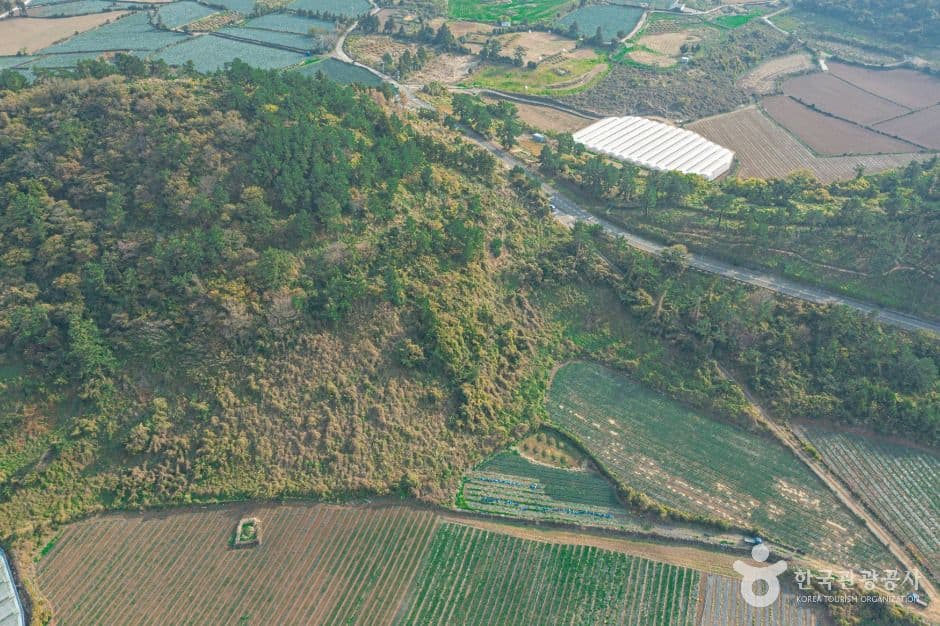
Located in Dongil-ri, Daejeong-eup, Seogwipo, Gasi Oreum takes its name from the abundance of thorn trees (water oak) that have grown across the landscape since ancient times. The summit features a horseshoe-shaped crater opening toward the southwest. While the southeastern slope is steep, the northwestern side is relatively gentle, making the hike to the top easy and accessible. With well-maintained trails, the summit offers breathtaking panoramic views of the surrounding Moseulpo Oreum and the Daejeong-eup area. The path to the peak is lined with farm roads and lush forests of mixed trees, interspersed with species such as Japanese wax trees and silverberry. Some slopes also feature cultivated farmland stretching halfway up the hillsides. For visitors using navigation, parking is available near the cattle shed on the southwest side; alternatively, parking is available on the opposite side by searching for Dongil-ri, Daejeong-eup.

Galmamot PondNature

East120 min

Galmamot Pond

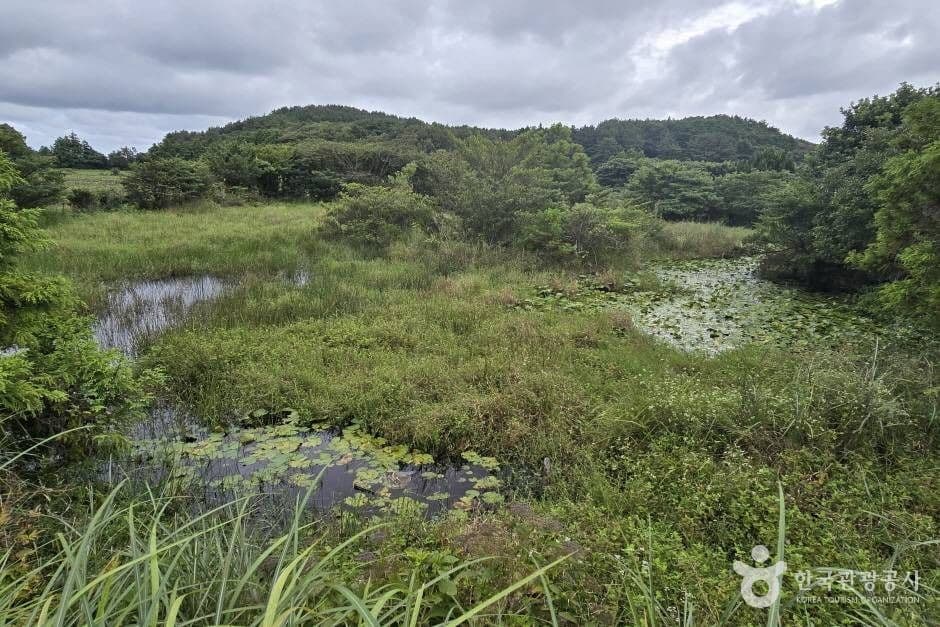
Located at the entrance of Namsanbong along the road leading to Seongsan from Seongeup-ri intersection, this pond is administratively part of Sinpung-ri but belongs to the village of Seongeup-ri due to its proximity. According to feng shui lore, its name "Galmamot" originates from the sight of a thirsty horse drinking its fill, or from its historical use as a watering hole for horses and cattle. This natural pond is renowned for never running dry, even during severe droughts. A small central pool is encircled by a stone wall and features a "mulpangdol" (a stone used for drawing water), a remnant of its time as a primary drinking water source. Water is believed to flow into the pond via a channel from the crater of Namsanbong, supplemented by an artificial drainage system installed beneath the roadside. While a small portion (approximately 60㎡) was reclaimed for agricultural use, the pond remains a vibrant ecosystem. The central pool hosts colonies of *Nymphoides peltata* (water nymph), a protected species designated by the Ministry of Environment, while the edges are dominated by *Eleocharis* (spikerush). The diverse vegetation can be categorized into distinct communities of *Eleocharis*, *Sagittaria*, *Nymphoides*, and *Nymphoides peltata*, with shallower edges supporting species like *Alisma*, *Scirpus*, and *Ludwigia*.

Gamnang OreumNature

South120 min

Gamnang Oreum

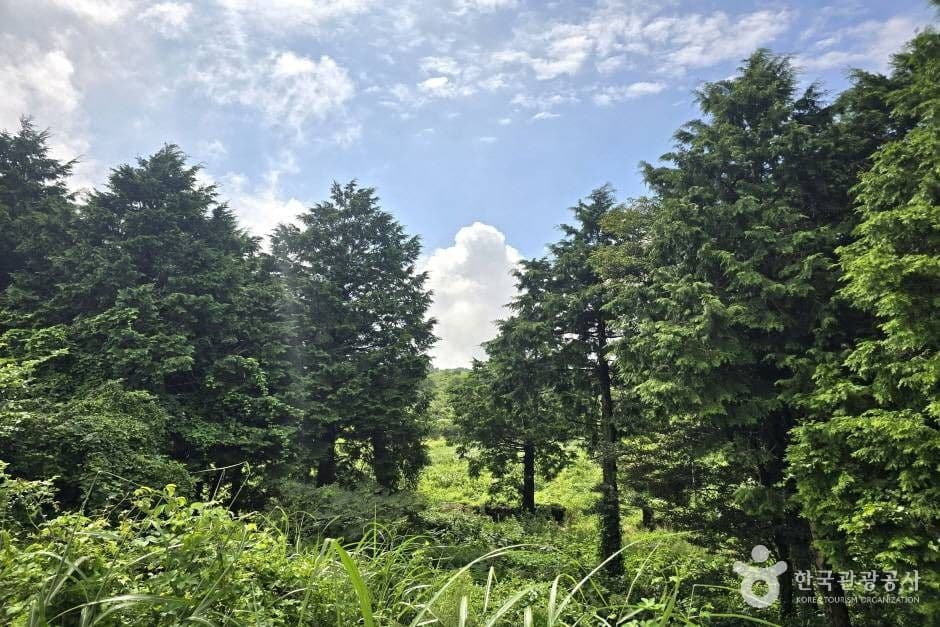
Located northeast of Donggwang-ri, Andeok-myeon, Seogwipo, Gamnang Oreum is a parasitic cone featuring gentle slopes and a horseshoe-shaped crater facing the northeast. The crater area is covered in lush grasslands, while the surrounding slopes are blanketed in cedar forests. Because Gamnang Oreum and Wonmul Oreum are joined by a continuous ridge like conjoined twins, a popular hiking route involves ascending the pine-forested Gamnang Oreum and descending via Wonmul Oreum. The trek takes about 30 minutes along grassy trails where cattle and horses once roamed. On clear days, the summit offers breathtaking panoramic views of Hallasan Mountain, Sanbangsan Mountain, and even Gapado Island in the distance. The location is also conveniently close to O'sulloc Tea Museum, famous for its green tea fields and desserts, and Camellia Hill, making it an ideal stop for a day trip.

Gapseon-i OreumNature

East120 min

Gapseon-i Oreum

Located in Gasi-ri, Pyoseon-myeon, Seogwipo, Gapseon-i Oreum features a distinctive horseshoe-shaped crater that opens toward the southwest. The landscape is defined by the Gasinae stream flowing to the west and the cozy village of Gasi-ri nestled nearby. The terrain is surrounded by Seol Oreum to the northwest and Gasio Oreum to the south. While the exact meaning of the native Jeju name "Gapseon-i" remains uncertain, historical Chinese character transcriptions include Gapseonak (甲先嶽), Gapseonak (甲蟬嶽), and Gapseonak (甲旋嶽). Some believe the name originates from the latter transcription, suggesting the shape resembles a cicada or a grub that has yet to shed its shell. The surrounding area is characterized by a peaceful patchwork of graveyards, orchards, and farmland. A stream named Gamacheon flows between the village and the oreum, eventually leading to the shores of Sehwa-ri. The foothills are planted with cedar trees, while the slopes are covered in lush mixed forests of evergreen and deciduous trees.

Gangjeongcheon StreamNature

South120 min

Gangjeongcheon Stream

Located east of Gangjeong Village, the southernmost village in Seogwipo, Gangjeongcheon is a 16km-long spring-fed stream whose name reflects its abundant waters. Fed by natural bedrock water from Hallasan Mountain, the stream flows year-round and serves as a habitat for sweetfish and flocks of mandarin ducks, a protected natural monument. The area near Gangjeonggyo Bridge features shallow waters, making it an ideal spot for families with children to splash around. The stream is conveniently located near Yakcheon Temple, Jeju's largest temple, as well as Seogeondo Island—accessible only at low tide—and Beomseom Island on Olle Trail Course 7. Escaping the heat amidst this harmony of pristine waters and stunning natural scenery offers a refreshing experience distinct from Jeju's coastal adventures.

Gaeori OreumNature

North120 min

Gaeori Oreum

Located east of the Jeju Pony Ranch, Gaeori Oreum is a complex volcanic formation characterized by three distinct peaks of varying sizes. The main peak, where a broadcasting tower stands, serves as the centerpiece of this unique landscape. The volcano features two horseshoe-shaped craters: the larger northern crater and a smaller conical peak in the center known as Saetgaeori. The entire slope is covered in a lush natural forest of deciduous and evergreen trees, interspersed with cedar and pine. During the winter months, the sight of rows of cedar trees against the grayish-brown slopes—stripped of their leaves—creates a striking and ethereal scenery. Due to its resemblance to a stingray (gaori), the mountain is also known by several local names, including Gaori Oreum, Gaewori Oreum, and Gaewol Oreum.

Gaetgeori OreumNature

South120 min

Gaetgeori Oreum

Gaetgeori Oreum is a distinct conical volcanic cone located along the roadside, connected to the eastern side of Georinsaseum and separated from it by a steep mountain pass. A rest area situated at mid-level on the slope of Georinsaseum offers drivers a place to pause and enjoy panoramic views of Jeju’s southwestern landscape, as well as the coastline stretching from Seogwipo City to Mosulpo Beach. Note that another oreum also known as Gaetgeori Oreum can be found east of Munsudo in Myeongwol-ri, Hallim-eup. On the southern side of this oreum lies the Manbeongdeung Cemetery, a site steeped in Jeju’s history where victims were buried, offering visitors a poignant space for remembrance and reflection.

Georin-saseum OreumNature

South120 min

Georin-saseum Oreum

Georin-saseum is a parasitic cone volcano featuring a distinctive horseshoe-shaped crater that opens to the west. Located halfway up Hallasan Mountain, its name is tied to local deer legends, while "georin" is an archaic term meaning "split," referring to the oreum's two distinct peaks. A road passes through the center of the hill, leading to a rest area and observatory at its base that offers breathtaking panoramic views of Seogwipo City. The slopes are covered in lush, dense forests, with Gaetgeori Oreum to the east and the Seogwipo Natural Recreation Forest nearby. Whether you are looking to hike, enjoy sweeping city views, or stroll through forest paths filled with phytoncides, Georin-saseum offers a perfect three-in-one travel experience.

Gyeongseong SusanNature

West120 min

Gyeongseong Susan

Located near Hallim General Stadium, Gyeongseong Susan is a specialized takeout seafood shop offering a diverse selection of fresh catches, including wild-caught and farmed seafood sourced directly by a Jeju local. The shop is known for its cleanliness and affordable prices, featuring a small seating area with about four tables. They expertly prepare seasonal live fish such as yellowtail, mackerel, and red seabream, and even peel shrimp for easy eating. It is a popular spot for travelers to grab takeout for their accommodations, though light tasting is available on-site. For the best quality, it is recommended to consume takeout within one hour. The shop is conveniently located near Hallim Port and Ongpo Port.