Monthly Jeju · Monthly
November 2026
Trending spots and seasonal highlights, updated each month.
Jeju · Travel
Silver Waves of Jocheon
Walking through the buckwheat fields and quiet slopes of Waheul
As November settles over the Jeju mid-mountains, the vibrant greens of summer fade into a muted, contemplative palette of silver and ochre. In the quiet corners of Jocheon, the wind breathes through buckwheat fields and ancient volcanic ridges, offering a sanctuary for those seeking the island's slower, more introspective rhythm.
The air in Jocheon has changed. It no longer carries the heavy, salt-laden humidity of August, but a crisp, sharpened clarity that makes the horizon feel infinitely further away. As November arrives, the island sheds its frantic tourist energy, retreating into a season of quietude and soft, grey light. In the mid-mountain reaches of Jocheon-eup, this stillness is even more pronounced, broken only by the rhythmic rustle of drying grasses and the distant, hollow call of a bird crossing the valley.
To walk through the Waheul buckwheat village during this time is to move through a landscape of silver. The buckwheat flowers, once a bright white blanket, have turned into a delicate, swaying sea of silver-grey, shivering under the late autumn wind. It is a visual lullaby, a gentle movement that mimics the waves of the distant coast, yet feels entirely grounded in the earth. There is a specific kind of peace found here—not the exuberant joy of spring, but a settled, soulful calm that invites deep reflection.
The light in November is low and oblique, casting long, dramatic shadows across the volcanic terrain. When the sun manages to pierce through the moving clouds, it illuminates the buckwheat fields in flashes of brilliance, turning the silver waves into a shimmering, metallic expanse. It is a landscape that demands a slower pace, a walking rhythm that matches the steady, unhurried breath of the island itself.
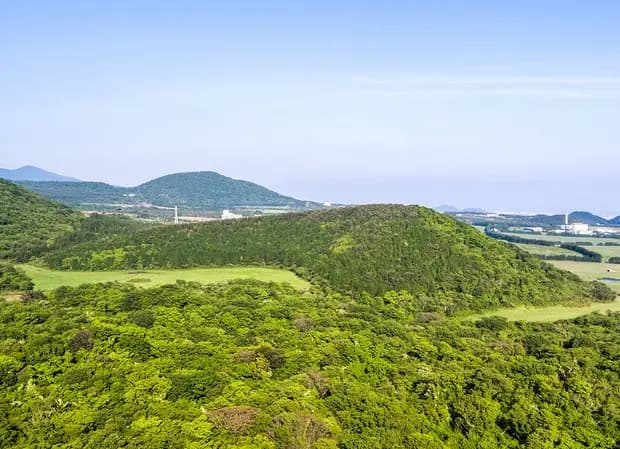
Moving away from the silver fields, the topography begins to shift into the undulating curves of the oreums. These volcanic cones, the ancient heartbeat of Jeju, stand as silent sentinels over the Jocheon plains. In the late autumn, the grasslands covering these hills turn a deep, toasted gold, contrasting beautifully against the dark basalt stones that dot the landscape. Walking the trails of Jigeuri Oreum, one feels the immense scale of the island's geological history beneath every step.
The ascent is gentle, a gradual climb through patches of dense, natural forest that offer brief respite from the wind. The scent of the forest in November is earthy and rich—the smell of damp soil, decaying leaves, and the sharp, clean aroma of pine needles. As you reach the crest of the peaks, the world opens up. From the heights of the Jigeuri landscape, you can see the patchwork of Jocheon’s villages and the distant, shimmering line of the eastern coast, a reminder of the dual nature of this island: the rugged mountains and the endless sea.
There is a profound sense of isolation here that is not lonely, but rather restorative. In the off-season, the trails are often empty, leaving you alone with the wind and the view. It is a space where time seems to stretch and slow, allowing the mind to untether from the frantic pace of modern life. The rhythmic movement of walking becomes a form of meditation, a way to process the changing seasons and the passing of time.
In the silver movement of the buckwheat, one finds a mirror for the quiet transitions of the soul.
TripJeju
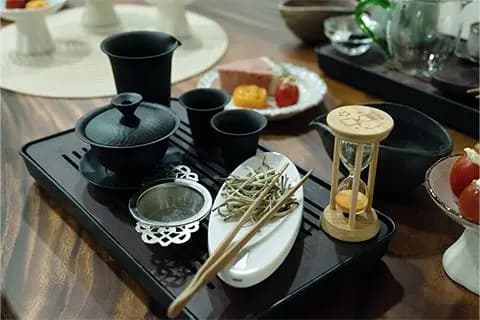
The afternoon light begins to wane, turning the sky into a gradient of bruised purples and pale ambers. It is the perfect hour to seek shelter in one of Jocheon’s more contemplative spaces. In the village of Seonheul, the Lumion Forest offers a different kind of immersion—a wellness-focused sanctuary where the concept of 'light' is treated with reverence. Here, the transition from the wild, windy outdoors to a warm, tea-scented interior feels like a gentle embrace.
Sitting in a quiet corner, watching the light filter through the trees, you realize that the beauty of Jeju in November is found in these subtle transitions. It is in the way a cup of tea warms your hands, the way the forest floor catches the dying light, and the way the silence of the mid-mountains feels so substantial. It is a season of 'healing,' a word often used but rarely felt with such visceral clarity as it is here, in the quietude of Seonheul.
The experience of the forest is visceral. Whether you are wandering through the shade of the nutmeg trees on the Thunberg's Bay-tree Road or sitting in a stillness-focused wellness space, the connection to the earth is inescapable. The forest doesn't just surround you; it seems to settle into your lungs, slowing your pulse and calming the noise of the world. This is the essence of a Jeju autumn: a slow, steady return to oneself.
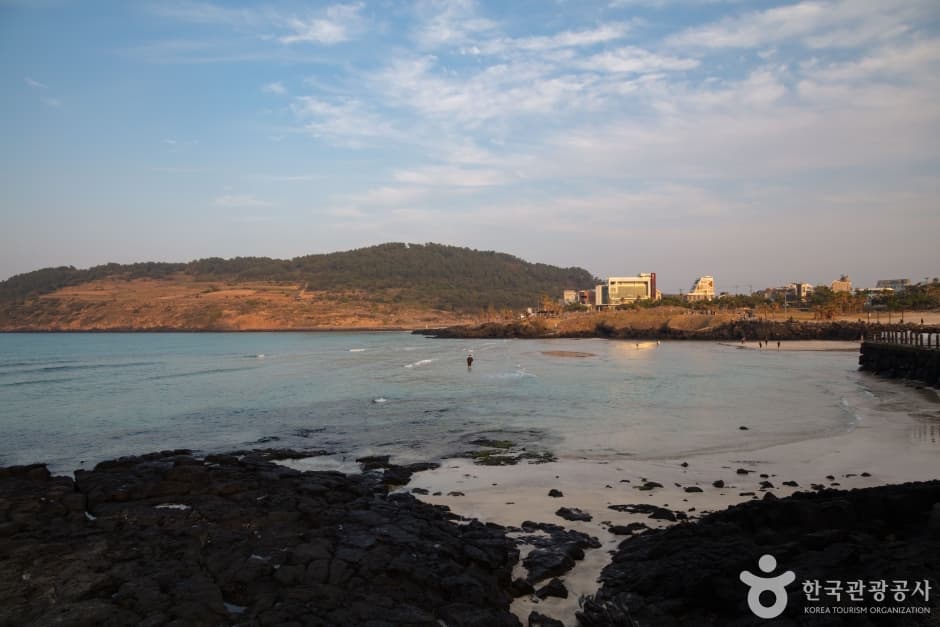
As the sun dips lower, the coastal edge of Jocheon begins to glow. The road from the mountains to the sea offers a dramatic shift in perspective. Moving toward Hamdeok, the landscape transitions from the earthy, muted tones of the mid-mountains to the bright, shifting blues of the ocean. The Seoubong Trail, a gentle ridge overlooking the coast, provides one last panoramic view of the island's eastern reaches.
From the summit of Seoubong, the view is breathtaking. The emerald waters of Hamdeok Beach crash against the dark basalt, and the horizon stretches out to meet a sky heavy with late-year clouds. In November, the sea feels more powerful, more restless, as if preparing for the coming winter. The wind here is stronger, whipping across the ridges, but it carries a sense of immense freedom.
Walking along the coast, the sensory experience is one of constant movement. The sound of the waves, the spray of the salt air, and the sight of the distant, dark silhouette of Hallasan Mountain—all of these elements weave together to create a sense of immense, beautiful scale. It is a fitting end to a day spent traversing the height and breadth of Jocheon’s landscape.
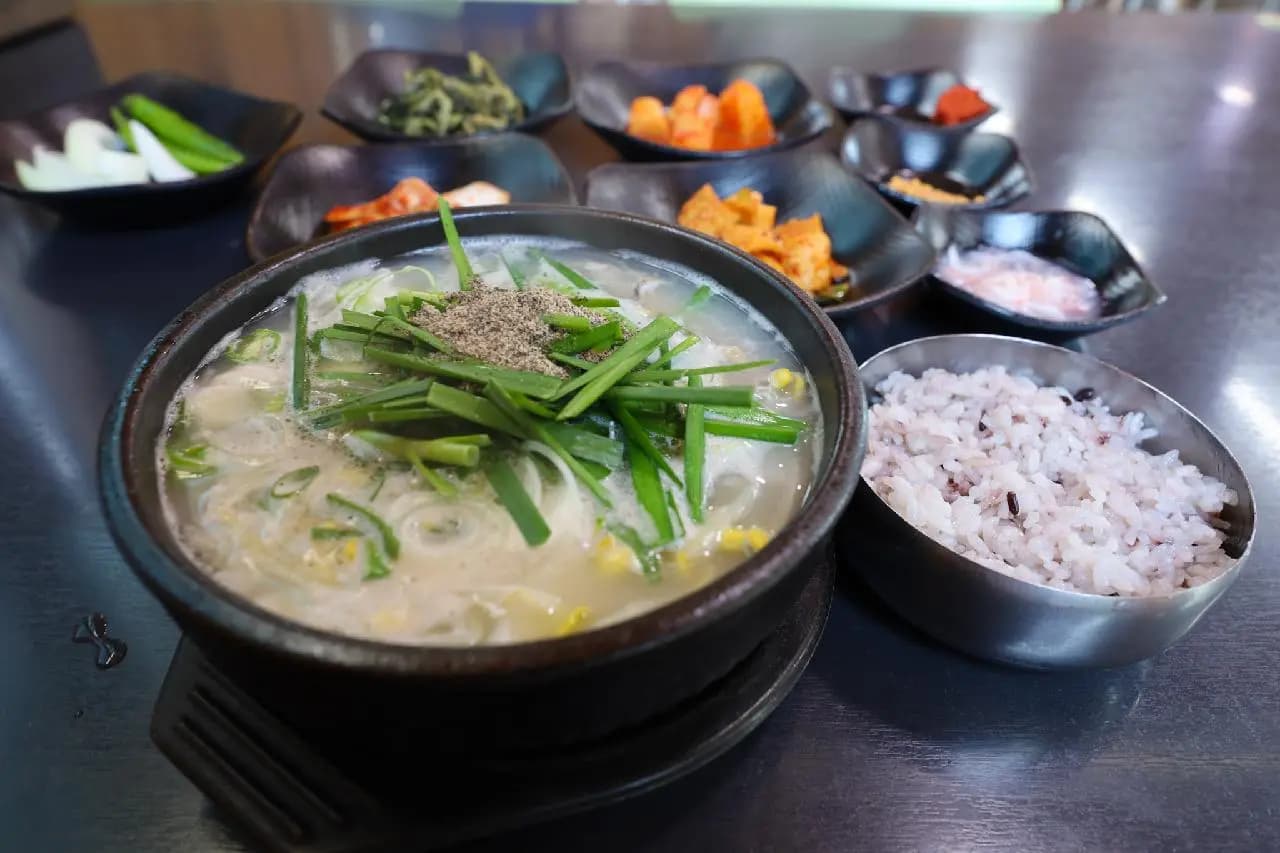
The day concludes with a quiet return to village life. Perhaps it is a small, warm meal at a local eatery like Gobeundal, where the steam from a bowl of traditional gukbap rises to meet the cool evening air. There is a particular comfort in the heavy, savory flavors of Jeju pork and rice soup when the air outside is biting and cold. It is the culinary equivalent of the landscapes we have walked—hearty, honest, and deeply rooted in the land.
The evening settles over Jocheon with a profound sense of peace. The lights of the small villages flicker on, casting a warm glow against the dark, volcanic earth. There is no rush to be anywhere else, no pressure to see everything or do everything. The beauty of this off-season ease is the permission it gives you to simply exist within the landscape, to be a witness to the slow turning of the year.
In the end, the silver waves of the buckwheat and the quiet slopes of the oreums teach us something about the necessity of stillness. They remind us that there is beauty in the fading, in the dormancy, and in the quiet moments between the bursts of seasonal color. Jeju in November does not demand your attention; it waits for you to find it in the silence.

As the moon rises over the dark ridges of the mid-mountains, the island feels even larger, more mysterious. The whispers of the wind through the drying grasses seem to tell stories of the long history of this land. To have spent a day in Jocheon is to have walked through layers of time, from the ancient volcanic eruptions to the delicate, seasonal dance of the buckwheat.
There is a lingering sense of clarity that stays with you long after you leave the trail. It is the clarity that comes from being truly present, from feeling the wind on your face and the uneven ground beneath your feet. The quiet of late autumn is not an absence of life, but a presence of something deeper—a quiet, pulsing vitality that waits patiently for the spring.
Jeju in November does not demand your attention; it waits for you to find it in the silence.
TripJeju
The silver waves continue to sway in the moonlight, a silent, shimmering testament to the quiet grace of the island. The journey through Jocheon is a journey into the heart of Jeju's autumn, a slow and poetic immersion into a world that knows how to rest.