Monthly Jeju · Monthly
October 2026
Trending spots and seasonal highlights, updated each month.
Jeju · Travel
The Crimson Ascent
Finding the soul of Hallasan in the autumn light
As October descends upon Jeju, the island’s central monolith transforms into a theater of fire and gold. Beyond the competitive rush for trail permits lies a profound, quiet metamorphosis of the landscape.
There is a specific kind of stillness that arrives in Jeju during the first weeks of October. It is not the heavy, humid silence of summer, but a crisp, expectant hush that settles over the volcanic peaks. The wind, once a warm breath from the southern seas, turns sharp and clean, carrying the scent of dried leaves and cooling stone. This is the season of the great ascent, when the islanders and travelers alike turn their eyes toward Hallasan, the mountain that stands as the silent axis of the world. To watch the light change against its silhouette is to witness the very pulse of the island's seasonal rhythm.
In the early morning, before the sun has fully crested the horizon, the mountain appears as a dark, brooding presence against a violet sky. The air is thin and invigorating, forcing a deep, conscious breath into the lungs. As you begin the trek, the world narrows to the rhythm of your boots against the earth and the gradual shifting of colors. The vibrant greens of the monsoon months have retreated, replaced by a spectrum of ochre, russet, and a red so deep it feels visceral. It is a landscape in transition, shedding its summer skin to prepare for the long sleep of winter.
The preparation for this journey begins long before the first step is taken on the trail. For those seeking the summit, the 'reservation war' is a real phenomenon. To walk the paths of the Seongpanak or Gwaneumsa trails, one must navigate the digital gates of the reservation system with precision. It is a testament to the mountain's sanctity—a way to protect the very beauty that draws the crowds. But once the permit is secured and the ascent begins, the frantic energy of the city evaporates, replaced by a meditative focus on the path ahead.
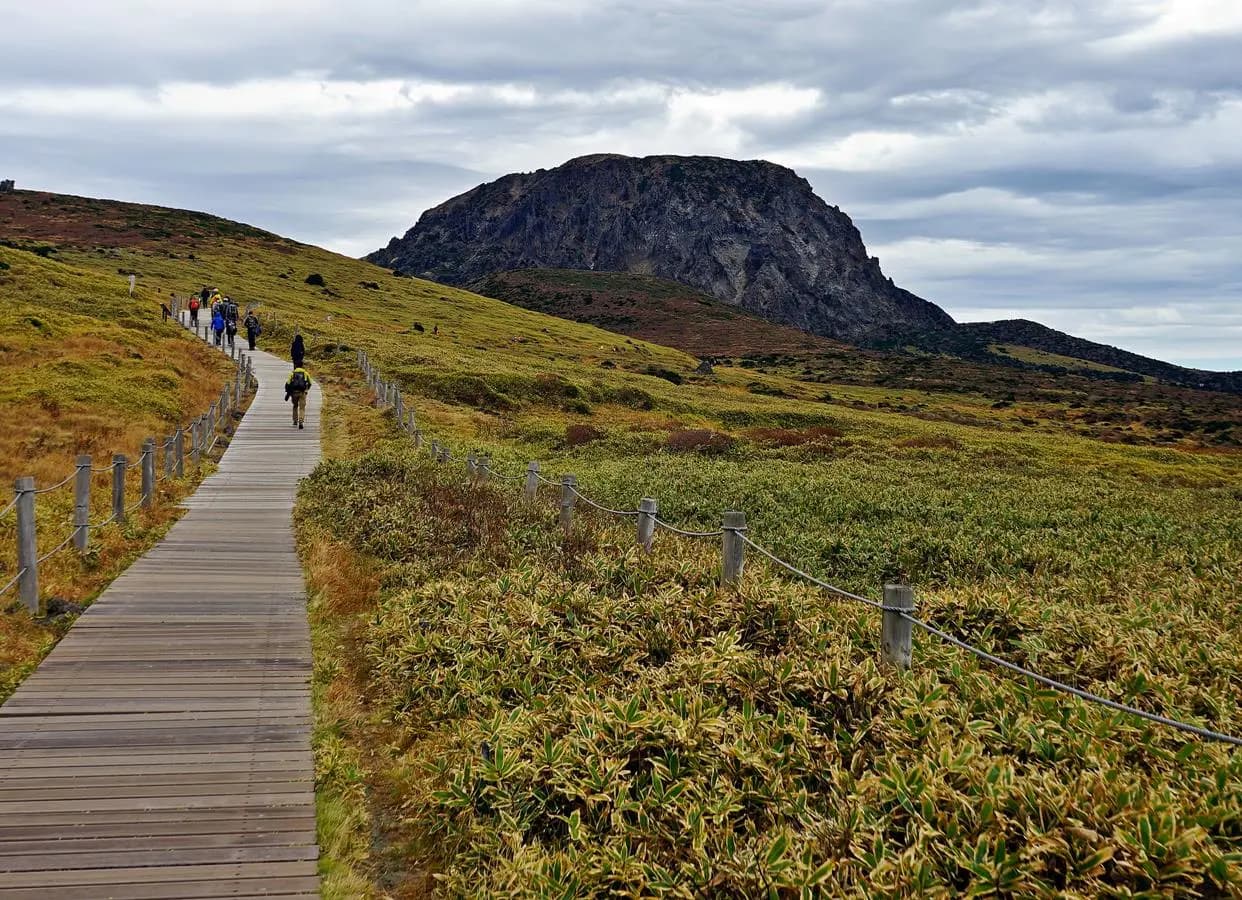
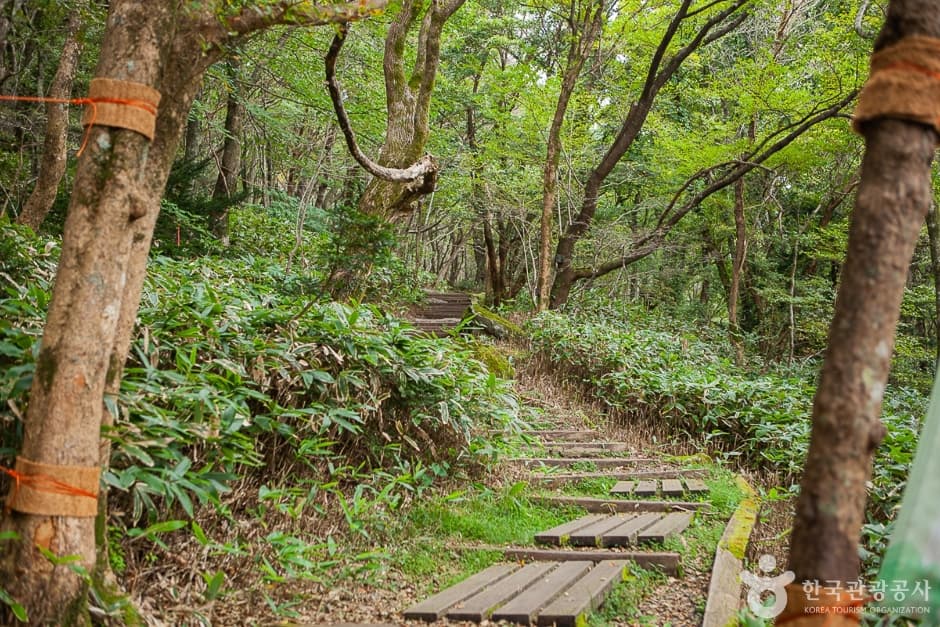
Walking the higher elevations, the vegetation changes with a suddenness that feels almost magical. The subtropical lushness of the lower reaches gives way to hardy, alpine flora that can withstand the biting winds of the heights. Here, the maples and oaks act as torches, lighting the way through the mist. Every turn in the trail reveals a new tableau: a cluster of bright red leaves against a basalt rock, or a canopy of golden ginkgo that seems to glow from within. The light in October is different—it is lower, more golden, casting long, dramatic shadows that accentuate the jagged textures of the mountain's ribs.
There is a profound sense of isolation that can be found even on the more popular trails if one moves with intention. If you step off the main beaten path for a moment—carefully, respecting the delicate ecosystem—you can hear the mountain speaking. It is in the rattle of dry leaves, the whistling of the wind through the crevices, and the distant, rhythmic drumming of a woodpecker. This is a place of sensory overload, where the visual brilliance of the foliage is balanced by the grounding, earthy textures of the volcanic soil and the cold, hard reality of the stone.
The climb is a physical dialogue between the body and the terrain. Each step requires a conscious negotiation with the incline, a steadying of the breath against the increasing altitude. Yet, there is a strange sort of euphoria that accompanies the effort. It is the feeling of being alive, of being small in the face of something ancient and unyielding. The fatigue in the legs becomes a badge of honor, a physical memory of the mountain's scale.
The mountain does not ask for your speed; it only asks for your presence.
A hiker's reflection
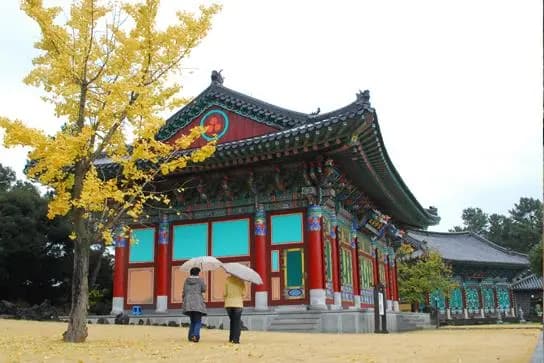
For those who seek a softer connection to the mountain's spirit, the surrounding paths offer a different kind of grace. The Buddhist pilgrimage routes, such as Jige's Path, offer a more spiritual trajectory. Here, the focus shifts from the physical conquest of the summit to the contemplative journey through the sacred. As you walk these paths, the presence of Hallasan is constant, a looming guardian that watches over the ancient temples and the quiet valleys. The autumn leaves here feel less like a spectacle and more like a shroud of sanctity, muffling the sounds of the modern world.
To wander through the Jeju Buddhist Pilgrimage sites is to experience the mountain as a place of refuge. The paths are lined with stones and shrines, often framed by the same brilliant autumn colors that decorate the higher slopes. There is a sense of continuity here—of seekers who have walked these same turns for centuries, seeking the same clarity that the crisp October air provides. The path of patience is not merely a name; it is a requirement of the terrain and the spirit alike.
As the sun begins to dip, the light turns to amber. The red of the maples deepens, almost appearing to bleed into the darkening sky. It is during these 'golden hours' that the true character of the mountain is revealed. The shadows stretch across the valleys, and the peaks catch the last, fervent light of the day. It is a time for quietude, for sitting on a weathered stone and simply watching the world turn from gold to gray.
Descending from the heights, the landscape opens up into wide, rolling valleys and the subtle curves of the oreums. These parasitic cones, the children of Hallasan, offer a different vantage point. From the crest of an oreum like Gase or Ansemi, one can look back at the great mountain and see its full, terrifying, and beautiful scale. The autumn colors extend from the mountain's peak down into these lower hills, creating a layered tapestry of red, orange, and gold that stretches toward the sea.
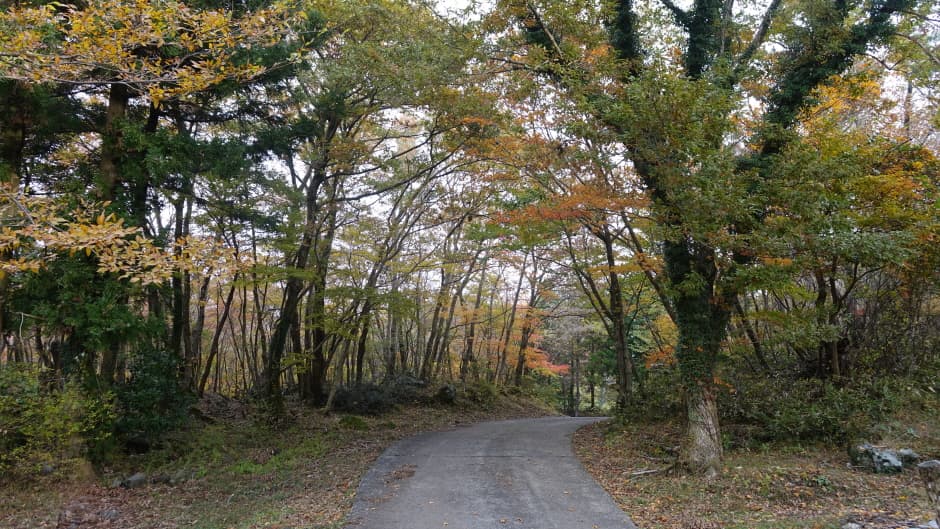
The transition from the verticality of the mountain to the horizontal expansiveness of the coast is one of Jeju's great joys. After a day of climbing, there is a unique satisfaction in reaching the coastal roads. Driving through the 5.16 Forest Tunnel, where the canopy of autumn leaves forms a living archway over the road, feels like a transition between two worlds. The trees here, a mix of evergreens and deciduous giants, create a corridor of shifting light and color that leads you from the mountain's heart toward the salt air of the coast.
In the villages at the foot of the mountain, the season is felt in the harvest. The air carries the sweetness of ripening citrus and the earthy scent of drying crops. The traditional architecture of places like Seongeup Folk Village provides a grounding context to the wild beauty of the mountain. Here, the relationship between the people and the mountain is visible in the stone walls and the way the houses huddle against the wind. It is a reminder that Hallasan is not just a landmark, but a living part of the island's cultural identity.
The beauty of October in Jeju is ultimately found in its fleeting nature. The peak of the foliage is a narrow window, a brief moment of intensity before the leaves fall and the landscape turns to the stark, monochromatic beauty of late autumn. This transience is what makes the trek so meaningful. We climb not just to see the view, but to witness a moment that will never be exactly the same again. The light will be different, the wind will have a different bite, and the colors will have shifted their hue.
For those who find the summit too daunting, the island offers many other ways to embrace the season. The coastal trails, the quiet streams like Musucheon, and the gentle slopes of the smaller volcanic cones all participate in this seasonal grand design. Whether you are standing at the edge of a cliff looking toward the sea or sitting in a quiet forest, the presence of Hallasan is felt. It is the anchor that keeps the island grounded, even as the seasons pull everything else toward change.
As the day ends and the stars begin to emerge over the jagged silhouette of the mountain, a profound sense of peace settles. The effort of the climb, the brilliance of the colors, and the crispness of the air coalesce into a memory that feels etched into the soul. To walk the autumn trails of Hallasan is to participate in a cycle as old as the volcanic rock itself—a journey of ascent, of witnessing, and of returning home, changed by the light.
To witness the mountain in autumn is to see Jeju breathing.
Editor's Note
Leaving the mountain behind, one carries the stillness of the heights back into the world. The colors of the forest remain behind the eyelids, a vibrant afterimage of the journey. Even as the temperature drops and the days shorten, the memory of the crimson ascent provides a warmth that lasts through the coming winter. Jeju in October is a lesson in the beauty of letting go, as the mountain prepares to shed its finery and wait for the next cycle of life to begin.
There is a lingering quality to the light here, a sense that the island is holding its breath. As you drive along the winding roads or walk the coastal paths, you are constantly aware of the mountain's presence. It is the silent observer of every sunset, every storm, and every seasonal shift. To know Hallasan in its autumn glory is to understand the true, unhurried spirit of Jeju.